
Finding great stories inside your school is one thing. Finding the time to tell those stories is another!
I know school social media managers have a million things on their plates, and sometimes even the best story ideas get pushed aside because you don’t have time to create a video, write the perfect caption, or track down every detail.
Well, I’m here with a simple trick that I recently used at New Auburn School District in Wisconsin. It took me less than two minutes to interview a student, and with the help of AI, I turned that conversation into an awesome social media post that reached thousands of people!
I did this twice, and between the two Facebook posts, we earned more than 20,900 views, 512 likes, and 62 comments! And that doesn’t even count the additional attention the videos received on Instagram.
Here’s exactly what I did, and how you can try this easy storytelling hack at your school.
It Started With Two Amazing Students
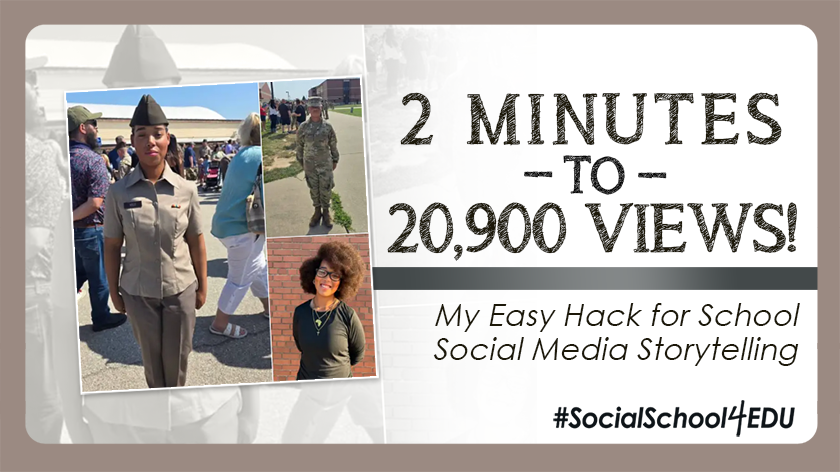
At the beginning of the school year, I learned that two of our students, Chantoya and Alton, had spent part of their summer completing military basic training. Both were entering their senior year of high school, and I immediately thought, “WOW! We need to recognize these students!”
We had great photos of their basic training experience, but I wanted more than a simple congratulations post. What made them decide to join the military? What was the experience like? What were their plans for the future? The answers to these questions make up the little details that turn a simple recognition post into a story your community actually wants to read.
Now, I love creating Reels and doing video interviews. I’m constantly encouraging schools to use more video in their social media storytelling.
But remember, not every great story needs to be a video! Sometimes you already have wonderful photos, and all that’s missing is the story behind them. And if you can gather that story in just a couple of minutes, why make it more complicated by trying to force a video?
My Secret Weapon: The Voice Memos App on My iPhone!
I happened to catch Chantoya walking into school on the very first day of the school year. If you work in a school, you know how crazy that day can be! There’s excitement everywhere, students are catching up with friends, and everyone is trying to figure out where they’re supposed to be.
In the midst of this chaos, I stopped Chantoya and said something like, “Hey, Chantoya! You did something really cool this summer. Can I ask you a few quick questions about it?” She said sure, so I pulled out my iPhone, opened the Voice Memos app, and started recording.
That’s it! No video camera, no microphone setup, and no worrying about lighting or what was happening in the background. We were just having a conversation, and she didn’t have to worry about being on camera. In fact, I only asked her four questions:
- What did you do this summer?
- Do you plan to go into the military after graduation?
- What branch of the military are you joining?
- When did you decide you wanted to join the National Guard?
These weren’t fancy questions, and I certainly hadn’t prepared an elaborate interview script. I was just genuinely curious about her experience, and I let her talk. Here’s her story:
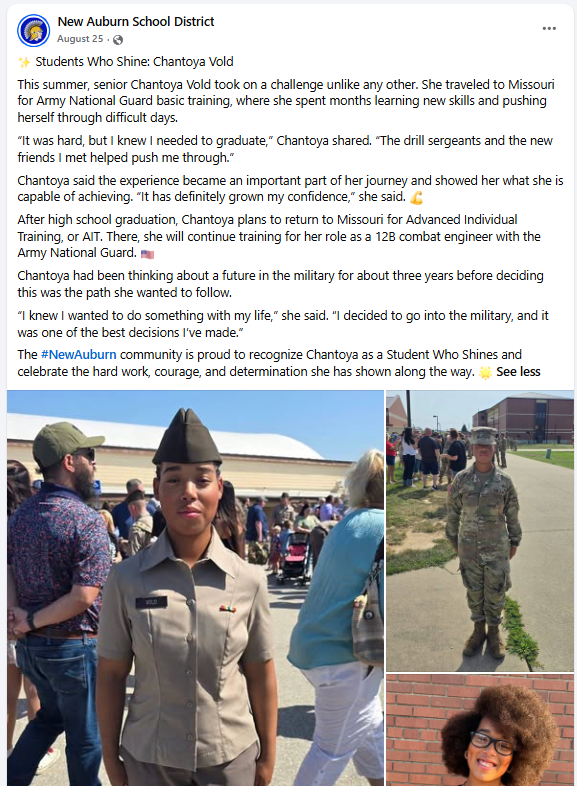
Did you notice that I never asked Chantoya what the hardest part was, how she had grown as a person, or what advice she would give someone else? She volunteered all of that information! Sometimes the best thing you can do as a storyteller is ask a simple question and then listen.
Before Chantoya headed off to class, I snapped a quick picture and asked permission to use some of the basic training photos her family had already shared on social media. Now I had everything I needed to create an amazing student spotlight!
Using AI to Tell This Story More Efficiently
After the interview, I didn’t have to sit down and listen to the entire recording again, because my iPhone 17 has a transcription feature built right into the Voice Memos app. I simply grabbed the transcript directly from my phone.
If your phone doesn’t have this feature, don’t worry! You can use another transcription tool to turn your audio recording into text. The important thing is getting those wonderful student responses into a format you can easily work with.
Next, I copied the transcript and used AI to help me create the social media post. I wanted the post written from our school district’s perspective, celebrating Chantoya’s accomplishment while sharing some of the interesting details she had told me. I also wanted to incorporate a couple of her direct quotes so our followers could understand her personality.
Here’s a simple AI prompt you can use for your own student spotlights:
“Help me create an engaging Facebook post for our school district celebrating one of our students. I’m sharing the transcript of a short interview I conducted with this student.
Write the post from our school district’s perspective in a warm, conversational, and celebratory tone. Start with an attention-grabbing opening that will make people want to read more. Share the most interesting details from the interview and include one or two meaningful direct quotes from the student.
Make the post feel authentic and personal, not overly formal or generic. Only use information that was actually shared in the interview, and do not invent details or quotes.
Here is the transcript: [PASTE TRANSCRIPT]”
Now, please don’t just copy whatever AI gives you and immediately publish it. I always review the output, make adjustments, and verify that the details and quotes are accurate. Voice transcripts can get names and other information wrong, so you’ll want to double-check those details, too. And make sure you follow your school’s policies for recording students, using their information with AI tools, and obtaining permission for photos.
This saved a lot of time because I didn’t have to sit down at my computer and come up with a story from scratch. I already had the student’s words, and AI simply helped me turn them into a well-written post.
I used the same basic approach with Alton, and we shared their stories in back-to-back weeks.
The Results? More Than 20,900 Facebook Views!
OK, now for one of my favorite parts. I love looking at the numbers behind our school social media posts because they show what our community is responding to. And these two posts definitely got people talking!
Chantoya’s Facebook Post
Here are the metrics on Chantoya’s story:
- 8,900+ views
- 4,800+ people reached
- 291 likes
- 44 comments
- 3 shares
I mean, WOW! That’s a whole lot of attention for one student spotlight that started with a quick conversation in the school hallway!
And while those numbers are exciting, what really made me smile was reading through the comments. People were sharing messages like “Oh my goodness, I’m so proud of you,” “Yay, Chantoya,” and “Chase after your dreams.” Others thanked her for her commitment to military service and wished her the very best in her future career.
There were 44 comments, and so many were filled with genuine encouragement and pride. Imagine being a high school senior and reading all those wonderful things your community is saying about you! What an incredible way to start your final year of high school.
Alton’s Facebook Post
The following week, I shared Alton’s story using the same simple process. Here’s how it turned out:
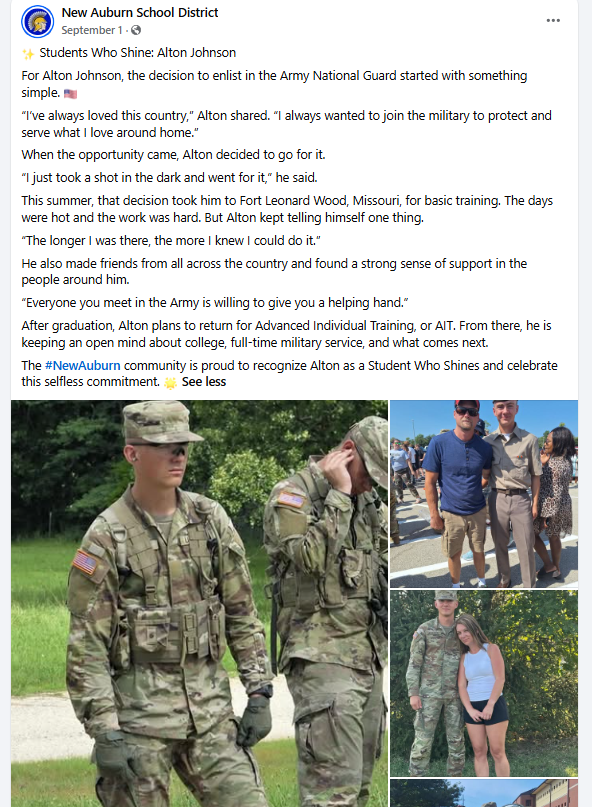
- 12,000+ views
- 5,800+ people reached
- 221 likes
- 18 comments
- 3 shares
And that’s just Facebook! Alton’s post also earned more than 2,800 views on Instagram and reached over 1,300 accounts on that platform.
Again, the comments were incredible. One person shared that their son also attended basic training at Fort Leonard Wood, served for 14 years, and recently re-enlisted. Others congratulated Alton and thanked him for his commitment to serving our country.
I love that! A post celebrating one student ended up giving other community members a chance to share their own family stories and connections to military service. That’s the kind of engagement you just can’t measure by looking at the number of likes.
And remember, these weren’t highly produced videos. They didn’t have fancy graphics, big headlines, or elaborate designs. They were real photos of real students, paired with stories about something important they had accomplished.
You Can Do This at Your School, Too!
Now I want you to think about the students and staff in YOUR school. How many incredible stories are happening right under your nose that your community doesn’t know about?
Maybe you have a student who started a small business, a student who volunteers every weekend, or an athlete who worked incredibly hard to overcome an injury. Maybe there’s a teacher who has an interesting hobby outside of school or a staff member who has been making a difference for decades.
These are the stories that help your community see what makes your school special. And the good news is that you don’t have to spend an entire afternoon creating content to tell them!
The next time you hear about someone doing something cool, grab your phone and ask if you can record a quick conversation. You don’t need a complicated list of questions. Start with something simple like, “Tell me about what you did,” and see where the conversation takes you. Ask a couple of follow-up questions if you need to, and don’t be afraid of a little silence. Sometimes people share the best details when you give them a moment to think!
Then grab a photo, get the transcript, and let AI help you pull the story together. You don’t have to choose between being efficient and creating meaningful content. With the right process, you can do both!
It’s Not Just About the Views. It’s About the IMPACT!
I could look at those 20,900+ Facebook views and call this a huge success. And from a social media performance standpoint, it absolutely was! But I think the real success goes much deeper than those numbers.
Think about Chantoya and Alton. They worked incredibly hard over the summer, accomplished something that most high school students haven’t experienced, and came back to school ready for their senior year. By taking just a few minutes to learn about their experiences, we were able to give their accomplishments the recognition they deserved.
Now they have hundreds of people cheering them on, congratulating them, and sharing their own experiences. Their classmates, teachers, families, and neighbors got to learn something about them that they may never have known otherwise. And our community has two more reasons to be proud of the young people coming out of our school!
This is why I love school social media storytelling so much. It’s not just about filling up your Facebook feed or making sure you have something to post every day. It’s about celebrating the amazing people inside your school and building a community that supports them.
So here’s my challenge for you this week. Find one student or staff member with a great story and spend two minutes getting to know them a little better. Don’t worry about creating the perfect video or having some elaborate content plan. Just have a conversation and see what you discover. Your next amazing social media post might be just two minutes away!
Happy storytelling!