
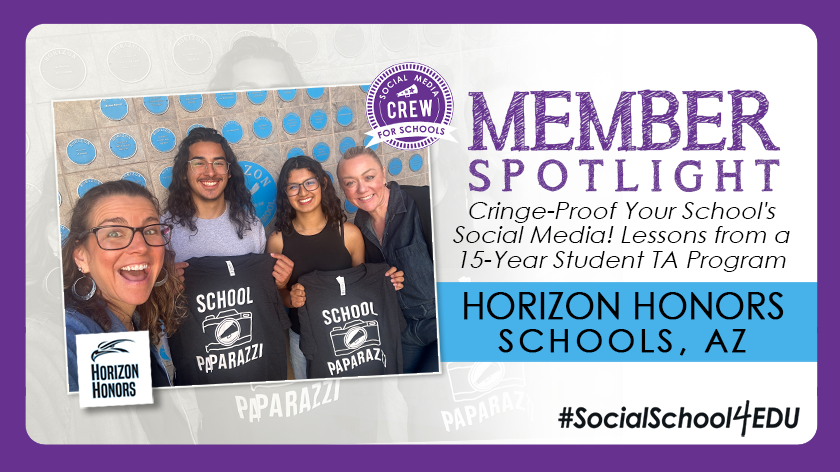
School communication student internship programs are a hot topic – and for good reason! Bringing students onto your storytelling team is a strategic move that pays dividends in authentic engagement and quality content. These digital natives understand exactly what makes their peers engage (or cringe!), bringing real-time insights to your communications team.
Plus, while students gain real-world marketing experience for their college applications and future careers, your school can benefit from consistent, relevant content that resonates.
But is it worth the work? Could this program realistically take off at your school? How about in a one-person school communications shop?!
Today’s article is a from-the-trenches case study that answers all three questions! YES – it’s worth the effort. YES – it’s realistic for districts of any size. And YES – you can make this work, even if you’re juggling a ton of other responsibilities as the only school communicator on the team.
Keep reading to learn how Melissa Hartley, Director of Communications & Marketing at Horizon Honors Schools in Arizona, launched her student social media program fifteen (!) years ago, which projects her TAs are responsible for managing, how she selects them, and how she has kept this successful program going strong for so long.
Go deeper into my conversation with Melissa Hartley by watching our full interview on “Mastering Social Media for Schools”!
A Lot Can Change in 22 Years
When Melissa started working at Horizon Honors in 2003, school communications looked dramatically different. As a one-person shop serving 1,500 students across three K-12 buildings, her days were filled with press releases, media pitches, and photocopied newsletters stuffed into student backpacks. Believe it or not, email wasn’t even part of the communication strategy yet!
“Everything is different now, literally everything. Back then, I spent most of my time working on earned and paid media, pitching to television and local newspapers – when we still had local papers!”
But the digital revolution was coming, and Melissa was ready. As websites and email transformed communication with families, she saw another change on the horizon: Social media. While many schools were still hesitant to embrace these new platforms, Melissa took a bold “ask for forgiveness, not permission” approach and grabbed her district handles as soon as she could.
“I just started doing it. When I showed the board and my superintendent the engagement – the comments, the likes, the community connection – they got excited and said ‘Keep going.’”
Other schools even started reaching out, asking how she was making it work.
Today, in 2025, Melissa’s communication strategy has completely flipped from what it looked like back in 2003. Traditional media relations have taken a backseat to social storytelling, where she maintains much better control of the school’s narrative.
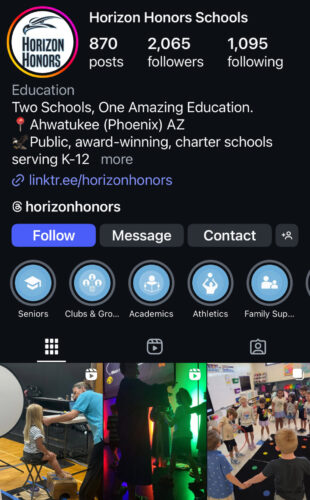 Facebook and Instagram serve as the primary channels for sharing good news, featuring student success stories, and (to a lesser extent, since celebration is the primary focus) keeping families informed.
“It was the Wild West then, and in some ways, it still is. We’ve made plenty of mistakes along the way, but we’ve built something special: A highly engaged community of parents who interact with our posts every day!”
But the real secret to Melissa’s social media success? She doesn’t do it alone. And that’s where our story really begins…
How Student Teaching Assistants (TAs) Started Working in the School Communications Office
Initially, Melissa had a couple of college interns from Arizona State University because they reached out and asked about earning college credit. She loved the chance to mentor students and have time to work on other projects, but the college intern program wasn’t sustainable from a budgetary standpoint.
So, Melissa looked at a successful program already embedded within the high school at Horizon Honors, which was the existing teacher assistant program. Why not have students assist the communications office just like they help teachers?
Fifteen years later, that experiment has evolved into a well-oiled machine, where students work 90-minute blocks on alternating days throughout the school year.
“They know what works because they live it. They help make our content something their peers would be proud of, not cringe at.”
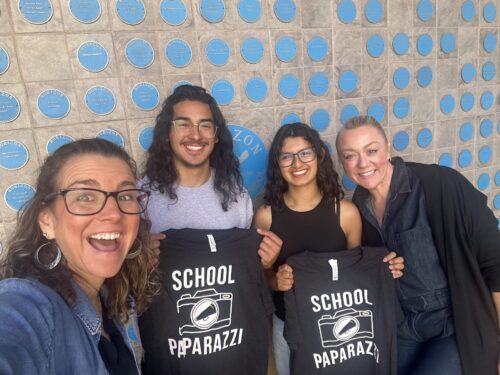
The TAs’ responsibilities depend on the individual students’ strengths and range from photography and video production to graphic design and content planning. But perhaps their most valuable contribution is their authentic perspective on what resonates with their peers.
“I often think I know what people want to see, but they’ll come in and say, ‘What if we did it this way instead?’ Our editorial discussions help keep content fresh and engaging!”
Beyond their scheduled time in the office, which works within their block schedule (one student works Monday/Wednesday/Friday and the other works Tuesday/Thursday), TAs capture authentic moments throughout their school day or during activities they participate in.
“If they’re at theater practice or a track meet, they’ll grab photos and videos. They’re the pulse of the school, catching moments teachers and staff might miss!”
Investment vs. Return: Building a Sustainable Program
While the program yields impressive results, Melissa has also been candid about the upfront investment required.
“It’s a lot of work onboarding a new student, maybe even more than an employee, because they’re not getting paid. But I would say to anybody who thinks ‘I don’t have time’ – make the time. It’s so worth it.”
Her careful screening process includes 20-30-minute conversations about interests and expectations. It’s not exactly an interview, but she needs to ensure they understand the role and are genuinely interested. Otherwise, it’s just babysitting.
“I want to make sure these are students who really get it and want to succeed and do well with the work they do for us.”
The initial training period demands patience, but the payoff is substantial.
“Suddenly, the light bulb goes on! I’ve had students who could run the office for hours, answering questions and publishing content independently.”
This becomes especially valuable in the lead-up to major events like graduation, where TAs are responsible for editing videos and graphics that will be shown during the ceremony: “Because it’s their friends walking across that stage, they’re incredibly invested in getting every detail perfect.”
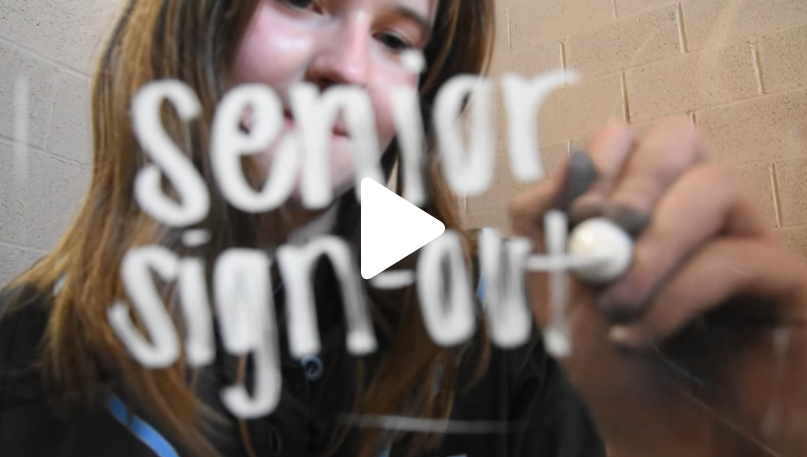
Watch this senior sign-out video:
Strategic Program Design: Creating Win-Win Opportunities
Melissa’s approach to program structure reflects her 15 years of refinement. She typically pairs an underclassman with a senior student, creating a natural mentorship pipeline.
“When my current junior returns as a senior next year, she’ll already know our systems. Meanwhile, I’ll bring in a sophomore or junior to learn the ropes.”
This long-term perspective benefits both the school and the students, who will be in the program for at least one academic year (hopefully longer!) They receive academic credit, too. You can view the Teacher Assistant Job Description she uses.
The professional benefits extend well beyond graduation. Former TAs regularly list Melissa as a reference for college applications and job searches, and several have pursued careers in communications.
“For young students building their first resume, this role carries more weight than typical teen jobs. They gain real-world experience in communications, marketing, and social media management. Several former TAs now work in similar roles across different industries, and they credit this program as their starting point!”
Considering This for Your School? We Can Help!
Student social media internships solve two major challenges for schools: Creating authentic content that actually connects with students and maintaining consistent posting when communications staff are stretched thin.
By tapping into students’ natural understanding of social platforms and giving them real-world communications experience, schools transform their storytelling from potentially cringe-worthy to genuinely engaging while providing valuable career skills to their students!
But does it take a lot of work? Absolutely! And that’s where #SocialSchool4EDU can help.
Our year-round membership program is packed with tools and resources to help you train and onboard your interns and keep yourself abreast of trends and new ideas in the world of school social media! We offer a Social Media Bootcamp every fall, an annual Canva Camp, and weekly live trainings that are tailored to all levels of social media experience. Plus, our private Facebook community is here to support you with questions and troubleshooting, every step of the way.
Melissa has been a member since September 2022 and highly recommends the program to anyone working in school communications!
If you’re not a client of Andrea’s, just get on board. It’s the best. It’s a support group you can always tune into. We all have the same challenges. We’re all here to help each other. It’s not a competition, it’s family. It’s great to hear the good and the bad that everybody is going through. Sign up; it’s worth every penny!
Ready to dive in and get the support you need and deserve!? Click here to learn about all the benefits!