

Student interns play a powerful role in telling your school’s story. They bring creativity, fresh ideas, and authentic voices that connect with your community.
But what happens when your state passes legislation banning cell phones in schools “from bell to bell”? Or your school adopts a cell phone free policy? We’re seeing this become more common across the country, and it’s leaving many school communicators wondering: “How can we still involve students in social media without breaking the rules?”
The good news? It’s still possible! Here are five practical ways to keep students engaged in social media generation when phones are off-limits.
Use Traditional Cameras
Old-school still works! Providing your interns with a DSLR or point-and-shoot camera is a great option. These cameras capture high-quality photos and videos, and they are exempt from cell phone bans.
Many schools already have cameras available through the yearbook, journalism, or IT departments. If your budget allows, investing in a user-friendly DSLR or mirrorless camera is a smart decision. Train students on the basics, and you’ll be amazed at the high-quality content they can create.
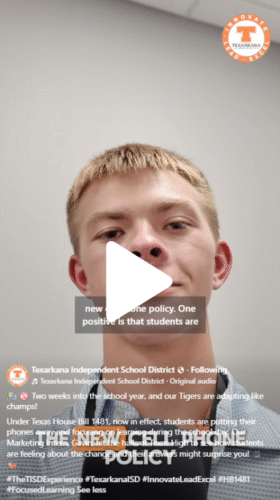
Here’s another idea: Texarkana ISD in Texas recently invested in traditional cameras for its student intern group, and the results have been fantastic! These student interns are capturing high-quality content across campus, and the posts are driving engagement in their community.
Check out these Reels created by Texarkana ISD interns this fall. They’re great examples of how students can still contribute to the district’s storytelling efforts, even without a cell phone in their hands.

Try GoPro Cameras
If you want to capture more action-oriented content, consider using a GoPro or other small video camera. These are lightweight, portable, and durable – perfect for capturing pep rallies, sports events, and behind-the-scenes classroom projects.
GoPros are especially great for short-form videos, which perform especially well on social media. Students will have fun playing with the creative angles and fun editing options these cameras provide.
Provide an iPad or Tablet
If your rules allow it, an iPad or tablet can be a fantastic alternative to a phone. These devices have strong cameras, are easy to carry, and can be restricted to only the apps your students need to do their jobs.
With Canva, Google Drive, and other editing tools accessible on tablets, students can capture content and edit it right on the same device.
Use “Educational Purpose” Exceptions (Where Allowed)
Some districts with phone bans include exceptions for “educational use.” If your school allows this, you may be able to give student interns special permission to use phones during the school day as part of their internship or class assignment.
It’s important to have this approved by the administration and clearly documented so there’s no confusion. If you’re pursuing this route, make sure you communicate expectations clearly with both students and staff. See the next tip for a way to do that!
Make Student Roles Official
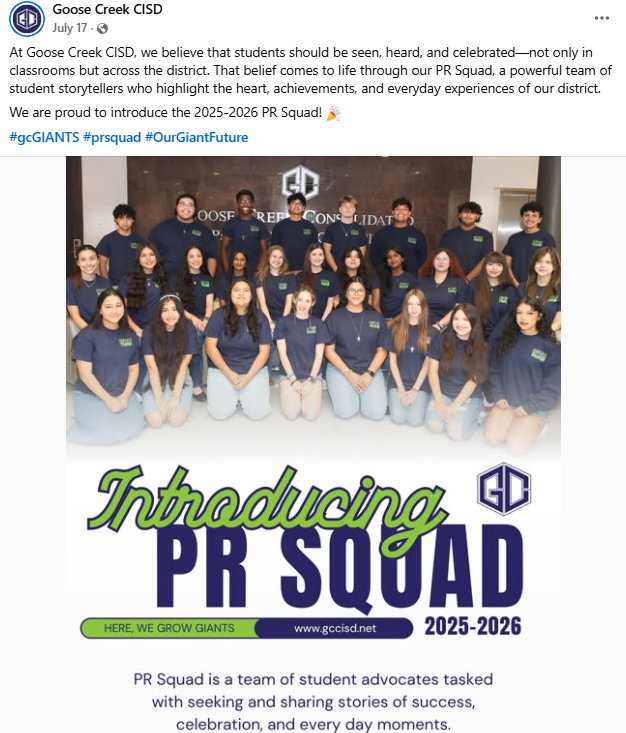
No matter which of the four above-mentioned tools you use, consider giving your social media interns an official title with a special badge or even a T-shirt. This helps students and staff recognize that these students are approved to capture content on behalf of the district.
For example, Goose Creek CISD in Texas has PR Squad t-shirts for their interns:
Here’s a sample badge design that you could try:
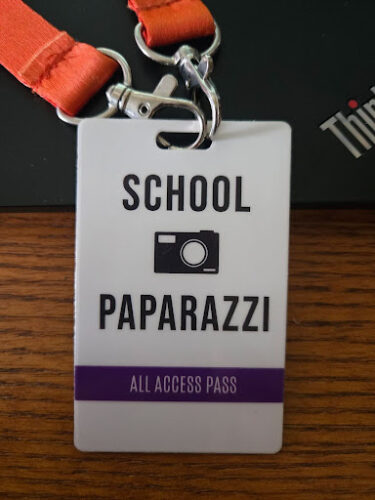
Not only do these designations reduce misunderstandings, but they also help the students build pride in their roles as school storytellers!
Students Can Still Keep Creating
Cell phone bans don’t have to mean the end of student involvement in social media. With a little creativity and the right tools, you can still empower your student interns to be amazing ambassadors for your district.
Remember, harnessing the power of authentic student voices is one of the most powerful ways to share your school’s story. Keep them involved, no matter what changes come your way!
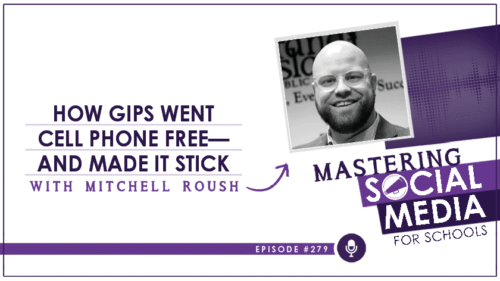
By the way, if you’re responsible for managing your school’s transition to a cell phone ban, you’ll love this podcast interview with Mitchell Roush, M.A., Communications & Marketing Director at Grand Island Public Schools in Nebraska. He breaks down how the district got buy-in from students, staff, and parents, how they made the transition mid-year, and all about the amazing results they experienced!
Want More Support Like This?
If you’ve found this article helpful, you’ll love being part of our #SocialSchool4EDU Membership Program. Inside the group, school communicators from across the country connect every day to share ideas, ask questions, and find solutions to challenges just like this one.
Whether it’s figuring out how new policies affect your role, finding fresh ideas for content, or simply having a network of people who “get it,” we’ve got you covered! With the Crew in your corner, you never need to navigate your job alone.

This is a guest post from Melissa Marti. Melissa is the Director of Membership at #SocialSchool4EDU and is an account manager for two of our management districts. She is a former high school teacher who loves staying connected virtually with students, staff, and all things education while chasing around her own busy kids. Melissa says, “There are amazing things happening in our schools every day. It’s powerful to be able to share those stories with our communities so together we can celebrate our students and staff!”